

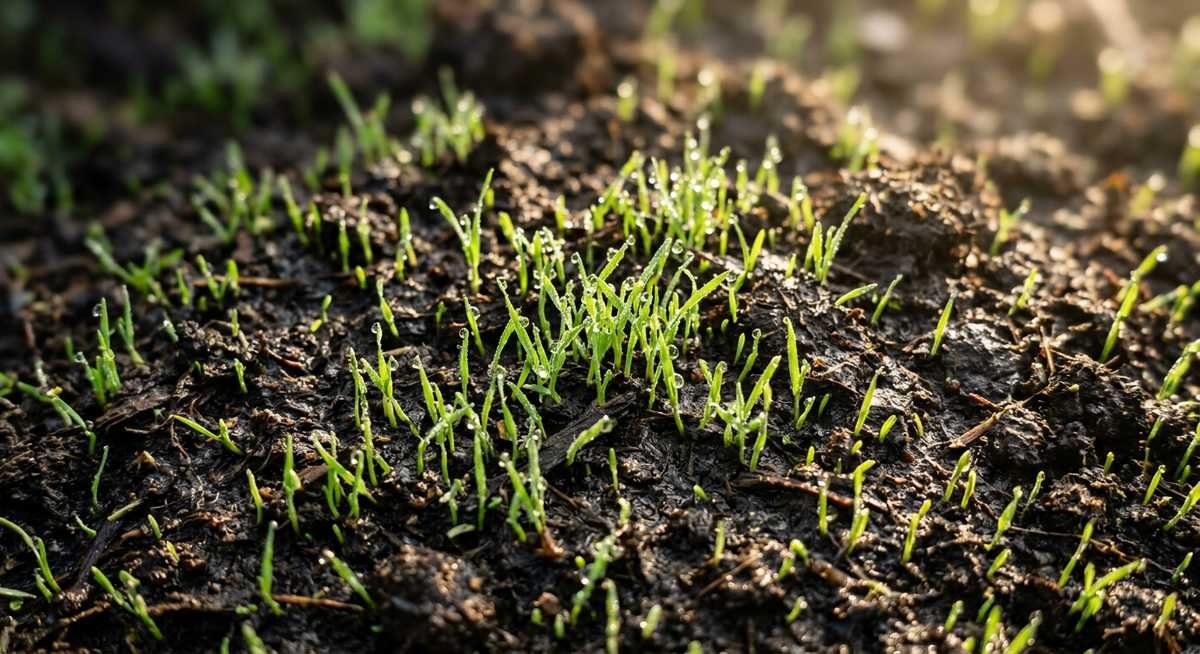
Most grass seed takes between 5 and 30 days to germinate, a range that reflects genuine differences in grass species, soil temperature, moisture consistency, and seed quality. Perennial ryegrass can show green shoots in as few as five days under ideal conditions. Kentucky bluegrass, on the other hand, routinely takes three to four weeks before a single blade breaks the surface.
What happens underground drives the germination period more than anything visible above it. Soil temperature matters more than air temperature, forecasts, or calendar dates. A seed sitting in soil that’s too cold simply won’t sprout, which is why dormant seeding in late fall can push emergence all the way to spring.
If it’s been two weeks and your lawn still looks like bare dirt, that’s often completely normal, especially for slower species like Kentucky bluegrass or Zoysia. Patience and consistent moisture will get you further than replanting ever will.
Germination Timeline by Grass Type (With Soil Temperature Thresholds)
Grass seed germination ranges from 5 days (perennial ryegrass under ideal conditions) to 30 days (Kentucky bluegrass or Bermuda grass in marginal soil temperatures). The variable that matters above all others? Soil temperature. Not rainfall, fertilizer, or seed brand. Air temperature can read 75°F while the soil sits at 45°F, and warm-season seeds planted in those conditions simply won’t move. According to Penn State Extension’s lawn establishment research, soil temperature is the primary environmental trigger for grass seed germination across both cool- and warm-season species.
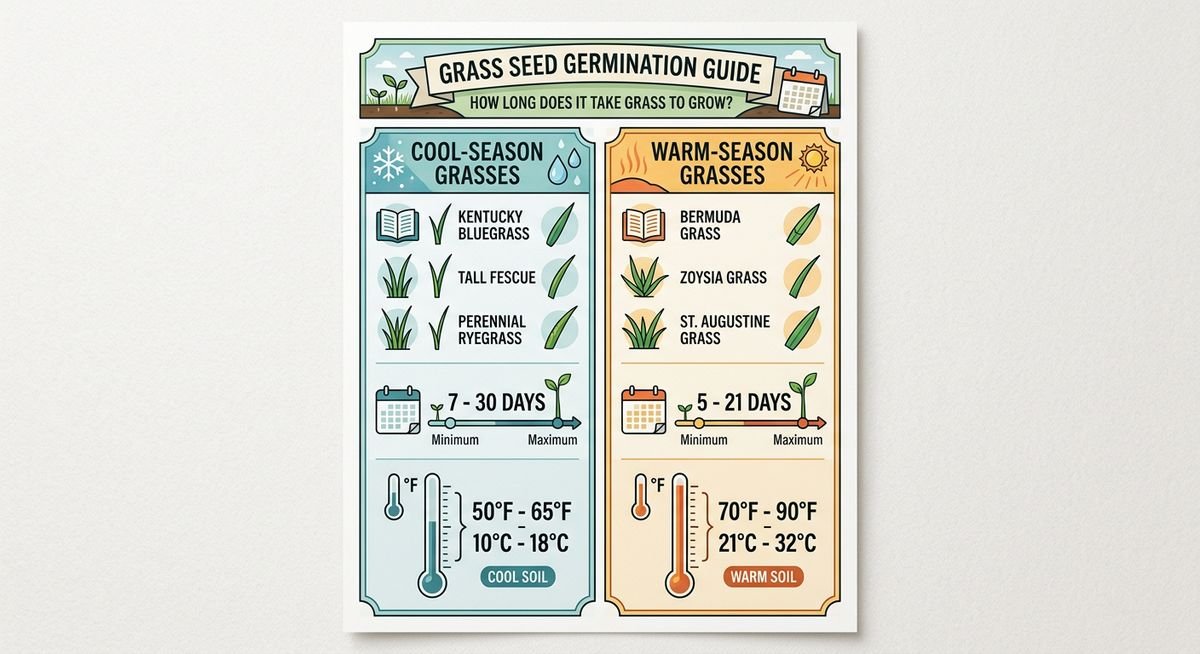
Cool-season grasses
Cool-season species germinate when soil temperatures sit between 45°F and 65°F, conditions most common during fall and early spring seeding windows. Perennial ryegrass is the fastest of the group, often showing visible shoots in as few as 5 days. Kentucky bluegrass sits at the opposite end, routinely taking 14–30 days even under textbook conditions.
| Grass Species | Germination Period | Optimal Soil Temp (°F) | Optimal Soil Temp (°C) |
|---|---|---|---|
| Perennial Ryegrass | 5–10 days | 50–65°F | 10–18°C |
| Tall Fescue | 7–14 days | 50–65°F | 10–18°C |
| Fine Fescue | 7–14 days | 45–65°F | 7–18°C |
| Kentucky Bluegrass | 14–30 days | 50–65°F | 10–18°C |
Fine fescue earns a slight edge in cold tolerance, germinating reliably at soil temperatures as low as 45°F. That makes it a practical choice for early spring seeding when the ground is still cold. Kentucky bluegrass, despite its popularity, demands patience most homeowners underestimate.
“Seed takes 3 weeks at least to germinate anyway.”
— r/GardeningUK — a UK-focused gardening community known for practical, no-nonsense advice, Mar 2026 (3 upvotes)
That three-week minimum tracks closely with Kentucky bluegrass and many warm-season species. Gardeners who expect visible results sooner are often working with ryegrass-heavy blends that happen to germinate faster than the label’s generic timeline suggests.
Warm-season grasses
Warm-season grasses require substantially warmer soil to break dormancy, with most species needing a minimum of 65–70°F before the germination period begins. Dormant seeding (planting warm-season seed before soil temperatures reach these thresholds) will delay emergence entirely until conditions warm, sometimes by weeks. Centipede grass is the most temperature-demanding of the group, stalling below 70°F. According to the National Turfgrass Evaluation Program (NTEP), warm-season species planted below minimum soil temperature thresholds show significantly reduced germination rates and increased seedling mortality.
| Grass Species | Germination Period | Minimum Soil Temp (°F) | Minimum Soil Temp (°C) |
|---|---|---|---|
| Bermuda Grass | 10–30 days | 65–70°F | 18–21°C |
| Zoysia | 14–21 days | 65–70°F | 18–21°C |
| Buffalo Grass | 14–30 days | 60–70°F | 16–21°C |
| Centipede Grass | 14–21 days | 70–75°F | 21–24°C |
A soil thermometer (available for under $15 at most garden centers) removes all guesswork here. Planting Bermuda grass in soil sitting at 58°F isn’t early preparation; it’s a waiting game where the seed sits exposed to disease and washout while accomplishing nothing.
Week-by-Week Grass Seed Growth Tracker
Most lawns show no visible progress for the first 5–10 days after seeding. That’s completely normal. The real action during the early germination period happens underground, where seeds absorb moisture and send out their first root structures before a single blade breaks the surface.
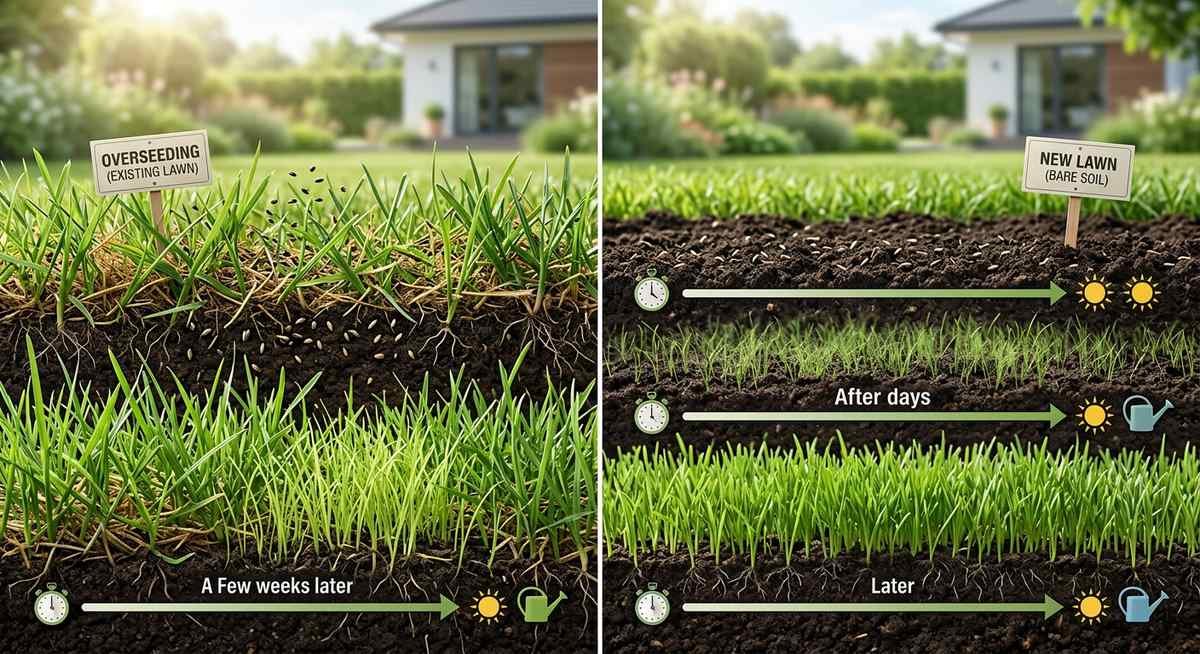
Days 1–7 (Germination begins)
Underground, the seed is absorbing water through a process called imbibition, swelling until the seed coat cracks and the radicle (the embryonic root) pushes downward into the soil. No green growth appears at the surface yet for most species. Disturbing the seedbed now (walking across it, raking, or allowing the surface to dry out and crust over) is the fastest way to destroy a germination attempt.
Soil temperature is already doing its work at this stage. Seeds sitting in soil below their minimum threshold stay dormant, which is why dormant seeding in late fall can delay visible emergence until spring warmth arrives.
Days 7–14 (First shoots appear)
Fast-germinating species like perennial ryegrass typically break the surface between days 5 and 10, showing thin, hair-like green shoots roughly 1/4 inch tall. Kentucky bluegrass, with its 14–30 day germination window, may show nothing at all during this phase. That’s not failure. It’s biology.
Healthy early shoots are bright green and upright. White or gray fuzzy growth at the soil surface usually indicates mold caused by overwatering or poor drainage, not germination. Bare patches at day 14 aren’t automatically a problem; uneven germination is common, especially across soil temperature variations in a single yard.
Weeks 2–3 (Visible coverage begins)
By the end of week two, most species are producing consistent green coverage across the seedbed. Grass blades typically reach 1/2 to 1 inch in height during this window, and the lawn starts to look intentional rather than accidental. Soil should stay consistently moist but never waterlogged. Standing water at this stage can suffocate developing roots.
“You can fill with topsoil and/or compost, sprinkle grass seed and it’ll grow within a couple weeks. Should fill out in a month. Water it on days it doesn’t rain.”
— r/GardeningUK, Aug 2024 (1 upvote)
That two-stage timeline (visible sprouting in two weeks, a filled-in patch within a month) holds true for most cool-season seed blends in moderate temperatures. Light foot traffic is still discouraged, though. Grass seedlings at this stage have shallow root systems, and compaction from walking can collapse the fragile soil structure around roots that are only beginning to anchor.
Week 4 and beyond (Establishment period)
Week four marks the transition from germination to establishment. Grass blades are filling in gaps, and the lawn begins to look uniform. The first mow is typically safe once blades reach 3–4 inches. Mow down to 2–2.5 inches, never removing more than one-third of the blade height in a single cut.
Full establishment for a new lawn takes 6–8 weeks from seeding. Overseeded lawns tend to blend with existing turf faster, often appearing cohesive by weeks 3–4, because the established root network supports faster integration of new seedlings. A truly walkable, durable lawn? That often takes a full growing season (sometimes two) before the root system can handle regular use without thinning.
| Timeline | What’s Happening | Visible Signs | Key Risk |
|---|---|---|---|
| Days 1–7 | Seed absorbs water; radicle emerges | None above ground | Seedbed disturbance; surface drying |
| Days 7–14 | First shoots emerge (fast species) | Thin green shoots (ryegrass); bare soil (bluegrass) | Mold from overwatering |
| Weeks 2–3 | Consistent coverage develops | Green fuzz; blades 1/2–1 inch tall | Foot traffic; waterlogging |
| Week 4+ | Establishment phase begins | Filling in; ready for first mow at 3–4 inches | Mowing too early or too short |
4 Factors That Speed Up or Slow Down Germination
Four variables control whether grass seed sprouts in 5 days or sits dormant for 30: soil temperature, moisture consistency, seed-to-soil contact, and seed viability. Get all four right and you compress the germination period significantly. Miss even one and the entire timeline shifts.
Soil temperature
Soil temperature is the factor most gardeners can actually control, and the one most choose to ignore. Air temperature and soil temperature are not the same thing; soil can run 10–15°F cooler than the air above it in early spring, which is exactly why cool-season seed planted in March often stalls despite warm afternoons. An inexpensive soil thermometer (typically under $15) takes the guesswork out entirely. Probe 2 inches deep before seeding.
Cool-season grasses need soil at 50–65°F; warm-season grasses stall below 65°F. Planting outside those windows doesn’t kill the seed — it triggers dormant seeding conditions, where the seed waits until temperatures climb into the viable range before germinating. According to Penn State Extension’s lawn establishment guide, consistent soil temperature monitoring is the most reliable predictor of germination success.
“Nighttime temps are still a bit on the low side for grass germination, ideally around 10 degrees or so. Wait a few weeks and try again.”
— r/GardeningUK, Mar 2026 (2 upvotes)
That 10°C (50°F) threshold keeps coming up across gardening communities. Daytime warmth isn’t enough if nights are still dipping into single digits Celsius. The soil never holds enough heat to trigger germination.
Moisture and watering consistency
Seeds need uninterrupted moisture from the moment they’re planted until the radicle anchors into the soil. A single dry day during peak germination can kill emerging radicles before they’re visible above ground. Standing water is equally destructive: saturated soil cuts off oxygen and causes rot within 48 hours.
The specific watering frequency required at each stage is covered in detail in the next section, but the core principle is this: consistent light moisture beats occasional heavy watering every time during the germination phase. For gardeners starting from bare soil, the same principles apply when building and maintaining raised garden beds, where consistent moisture management matters just as much.
Seed-to-soil contact and seedbed preparation
Seed resting on thatch, rocks, or loose mulch has almost no chance of germinating on schedule. The seed simply can’t absorb enough moisture or anchor a root. Direct contact with firm, loose soil is non-negotiable. Light raking after broadcasting seed, topdressing with a thin layer of compost, or making one pass with a lawn roller all dramatically improve contact and compress the germination period.
Seedbed preparation is where timeline gains are easiest to find. A well-prepared seedbed can shave days off germination compared to seed scattered over unprepared ground.
Seed quality and age
Old or improperly stored seed germinates erratically. Some seeds sprout on schedule while others never activate, creating patchy coverage that looks like a watering or soil problem. Every seed bag carries a “test date” printed on the label; that date indicates when the batch was laboratory-tested for viability. Seed tested more than 12 months ago loses germination reliability fast. According to the Association of Official Seed Analysts (AOSA), grass seed stored beyond 12 months under typical retail conditions can lose 10–20% of its germination rate per year.
Target a germination rate of 85% or higher on the label. Anything below 80% means you’re planting filler alongside viable seed, and the apparent germination timeline will look slower than it actually is.
| Factor | Ideal Condition | Common Mistake | Timeline Impact |
|---|---|---|---|
| Soil Temperature | 50–65°F (cool-season); 65–75°F (warm-season) | Planting by air temp, not soil temp | Can delay germination by weeks or trigger full dormancy |
| Moisture Consistency | Top 1/2 inch consistently moist; no standing water | Irregular watering or overwatering | Single dry day can kill radicles; rot sets in within 48 hrs of saturation |
| Seed-to-Soil Contact | Direct contact with firm, loose soil | Seeding over thatch or unraked ground | Poor contact adds 5–10+ days or prevents germination entirely |
| Seed Quality & Age | Test date within 12 months; 85%+ germination rate | Using old seed without checking label | Low viability creates patchy, slow-appearing germination |
Watering Schedule for New Grass Seed (Day-by-Day Guide)
New grass seed needs light, frequent moisture during germination and progressively deeper, less frequent watering as roots establish. The most common watering mistake is inconsistency. Even one afternoon where the top 1/2 inch dries out completely can kill emerging radicles before a single blade ever appears.
“You’re gonna need a lot of water the first 2–3 weeks. Roughly 10–15 min 4 times a day.”
— r/DenverGardener — a Denver-area gardening community focused on arid-climate lawn and garden challenges, Mar 2026 (2 upvotes)
Four times a day sounds aggressive, but in dry climates like Colorado’s Front Range, that’s what it takes. Humid climates with regular rainfall can get away with less, but the principle holds: the top layer of soil cannot dry out during weeks one through three.
Days 1–14 (Germination phase)
Water lightly 2–3 times per day (morning, midday, and late afternoon) keeping the top 1/2 inch of soil consistently moist. Use a gentle mist setting or oscillating sprinkler; a strong stream displaces seed and creates bare patches. On cool or overcast days, midday watering can be skipped, but never let the surface dry out and crack.
Weeks 2–4 (Shoot development phase)
Once shoots are visible, taper to one deep watering per morning, targeting roughly 1/4 inch of water per session. The goal shifts from surface moisture to encouraging roots to chase water deeper into the soil profile. Midday and afternoon sessions should stop entirely during this phase.
Week 4+ (Establishment phase)
Transition to a mature lawn schedule: 1–1.5 inches of water per week delivered across 2–3 sessions. Deep, infrequent watering at this stage builds drought-resistant root depth that shallow daily watering never achieves. Overseeded lawns are the exception: the thin existing turf layer dries faster, so maintain slightly more frequent watering through the first two weeks of this phase before fully stepping down.
| Phase | Frequency | Amount Per Session | Best Time |
|---|---|---|---|
| Days 1–14 (Germination) | 2–3x daily | Light mist, 1/2 inch soil depth | Morning, midday, late afternoon |
| Weeks 2–4 (Shoot Development) | Once daily | 1/4 inch per session | Morning only |
| Week 4+ (Establishment) | 2–3x per week | 1–1.5 inches total/week | Early morning |
The Pre-Emergent Herbicide Trap
Scotts WeedEx Prevent and similar products containing pendimethalin block grass seed germination for 120–150 days after application. The warning is printed on the packaging, but in small print that’s easy to miss. Homeowners who spread pre-emergent in early spring and then try to seed bare patches a few weeks later discover this the hard way. Four months of zero germination from perfectly viable seed.
Check your lawn care calendar before seeding. If pre-emergent went down within the last 120 days, the soil is chemically hostile to new seed. No amount of watering, soil prep, or premium seed overcomes an active pre-emergent barrier. According to Clemson Cooperative Extension’s lawn establishment guide, pre-emergent herbicide residue is one of the most commonly overlooked causes of seeding failure in residential lawns.
Plan around it: either skip pre-emergent in areas you intend to seed, or schedule overseeding for fall, well after the spring application’s effective window closes.
Why Isn’t My Grass Seed Growing? (Troubleshooting)
Bare soil after two or three weeks of waiting triggers panic, but the fix is usually one of five common problems. Not a full reseed.
Soil temperature is the first thing to check. Probe at 2 inches. Below 50°F for cool-season or 65°F for warm-season? The seed is dormant, not dead. Wait for warmer conditions.
A dried-out surface is the second most common cause. Even one dry afternoon can kill emerging radicles. Resume frequent light watering immediately.
Birds eating seed trips up a surprising number of homeowners. Uncovered seed on bare soil is a buffet. A light layer of straw mulch (thin enough that seedlings still get light) or germination fleece solves this.
Seed buried too deep is an easy mistake. Grass seed needs light to germinate. More than 1/4 inch of soil cover and most species stall. Rake lightly to expose.
Finally, check whether a pre-emergent herbicide is still active. Pendimethalin products block germination for 120–150 days.
A detailed preparation protocol posted by an experienced contributor on r/DenverGardener sums it up well: “Spray for weeds before you even think about seeding. Aerate. Spread a layer of compost. Spread your seed according to package directions. If you go too heavy, your seeds will just compete with each other and die.” Proper soil preparation solves most germination failures before they start.
Frequently Asked Questions
How long does it take grass seed to germinate after planting?
Most grass seed germinates within 5 to 30 days depending on species and soil temperature. Perennial ryegrass is the fastest at 5–10 days; Kentucky bluegrass is the slowest, often taking 14–30 days even under ideal conditions.
What temperature does grass seed need to germinate?
Soil temperature, not air temperature, controls the germination period. Cool-season grasses require 45–65°F soil; warm-season grasses need a minimum of 65–75°F depending on species. A $10–$15 soil thermometer eliminates the guesswork. Probe 2 inches deep before seeding.
What is the fastest-growing grass seed available?
Perennial ryegrass germinates in as few as 5 days under optimal soil temperature conditions (50–65°F), making it the fastest-establishing common turf species. It’s frequently used in overseeding blends for exactly that reason.
Why is my grass seed not growing after 2 weeks?
The most common culprits are soil temperature outside the viable range, inconsistent moisture, poor seed-to-soil contact, or an active pre-emergent herbicide in the soil. Check soil temperature at 2 inches deep. If it’s below 50°F for cool-season seed or below 65°F for warm-season seed, the seed is dormant, not dead.
When is the best time of year to plant grass seed?
Cool-season grasses perform best when seeded in early fall (late August through October), when soil temperatures drop back into the 50–65°F range. Warm-season grasses should be seeded in late spring once soil consistently holds above 65°F. Fall seeding is generally more forgiving than spring: less weed competition, more consistent moisture, and stable soil temperatures.
Does pre-emergent herbicide prevent grass seed from growing?
Yes. Pre-emergent herbicides containing pendimethalin (found in products like Scotts WeedEx Prevent) block grass seed germination for 120–150 days after application. If you’ve applied pre-emergent within the last four months, new grass seed will not germinate in treated areas regardless of watering or soil conditions.
Can you grow grass seed in shade?
Shade-tolerant species like fine fescue can establish in partial shade (4–6 hours of filtered sunlight), but full shade with zero direct sun makes grass establishment extremely difficult. Most gardeners who attempt full-shade grass report persistent failure. Ground cover alternatives or gravel paths are more practical for areas with less than 4 hours of light.
Conclusion
Most grass seed completes its germination period somewhere between 5 and 30 days. Perennial ryegrass sits on the fast end, Kentucky bluegrass and buffalo grass on the slow end. The range isn’t random. Soil temperature, consistent moisture, and seed-to-soil contact are the three variables that collapse or extend that window more than anything else.
Match your grass type to the correct soil temperature threshold before seeding. Keep the seedbed continuously moist through the first two weeks without letting it become waterlogged. Hold off on foot traffic or mowing until blades reach 3–4 inches. Rushing either one sets establishment back by weeks.
If nothing has sprouted by day 21, revisit the troubleshooting checklist above. Dormant seeding, surface drying, pre-emergent herbicide residue, or poor seed-to-soil contact are the usual culprits. All four are fixable without a full reseed.